MIRA
Intelligent Tomography for Predictive Diagnostics
Stop guessing and start predicting

MIRA IoT and Measurement Unit
The MIRA EIT/ERT/ERR/ECT/UST Tomographic Device is housed in a compact, portable case. It connects seamlessly to your mobile phone for easy interface and control a field.
Use with Your Smart Phone
The MIRA Tomographic Device is easy to use with a smartphone. No wires or installation required. Check the contents of your pipe or tank directly from your phone. Simultaneously, the data is transferred to the MIRA Cloud.

The MIRA (See and Observe) platform utilizes advanced real-time process tomography to continuously monitor and analyze the exact conditions inside your pipelines, tanks, and separators. By mapping cross-sectional media behavior, our technology transforms direct physical measurements into automated, predictive diagnostics. This proactive intelligence empowers you to forecast process anomalies, schedule pinpoint maintenance before failures occur, and prevent unplanned downtime. Crucially, MIRA’s predictive capabilities also actively drive your ESG initiatives forward by optimizing resource efficiency and drastically minimizing chemical and energy waste.
Supported Modalities:
- UST (Ultrasound): Direct deposit layer and solids imaging.
- Acoustic Emission (AE): Passive process anomaly detection, including leaks and particle impacts
- EIT (Impedance): Conductive flow analysis.
- ECT (Capacitance): Non-conductive media imaging, especially for oil & gas and chemical processes.
- ERT (Resistance): High-contrast conductive mapping.
- ERR (Resistance): Electrical resistance rheometry.
- Ultrasound Cleaning: Active sensor maintenance and fouling prevention.
- Ground Tomography: Subsurface structure and soil composition mapping.
Advanced IoT/VPN & Secure MIRA Cloud Reporting:
The MIRA unit serves as a comprehensive IoT device. All data is securely transmitted via VPN to our highly advanced MIRA Cloud. Every client is allocated a strictly isolated, dedicated server with a fixed IP. This ensures maximum data privacy and guarantees seamless connectivity without any risk of expiring security tokens. Customers are granted direct, secure access to their own cloud environment, where all diagnostic analytics, dashboards, and automated reporting are instantly visible and ready for action.
Compatible Products:
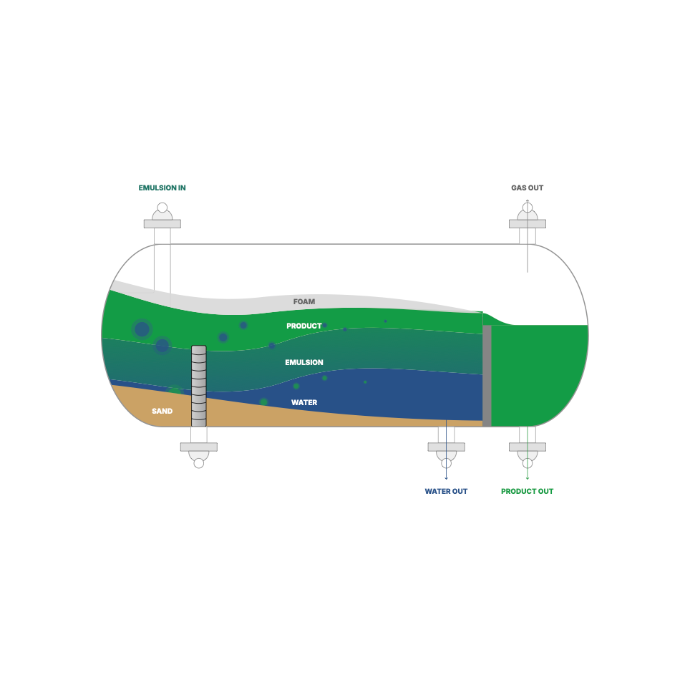
LEVEL IQ
Level IQ: MIRA can control an unlimited number of channels. The flexible extension part allows the probe to be positioned precisely anywhere inside the separator, regardless of the flange location.
Higher specifications are available with extended material selection.
View Level IQ
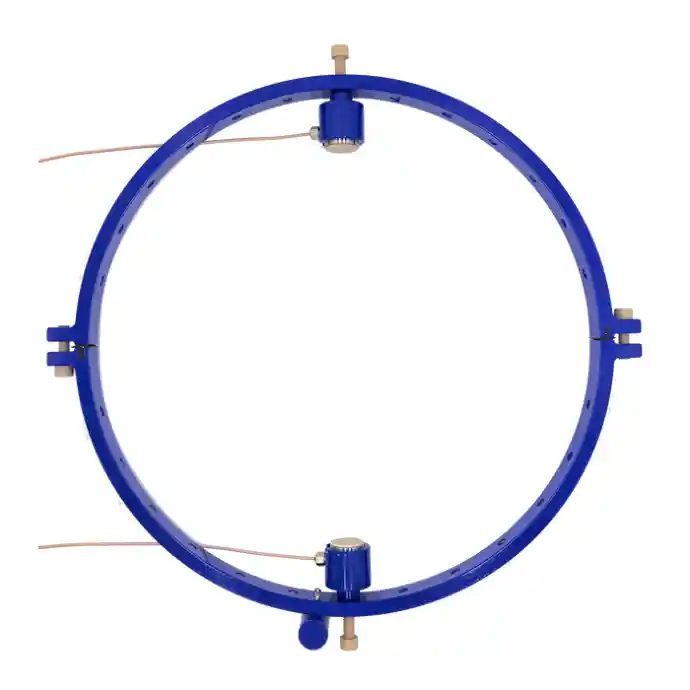
PIPE IQ
MIRA Cuff: Easy-to-use sensor positioning for pipe measurements.
Fast to attach, ensuring reliable and secure measurements. Available for any pipe size.
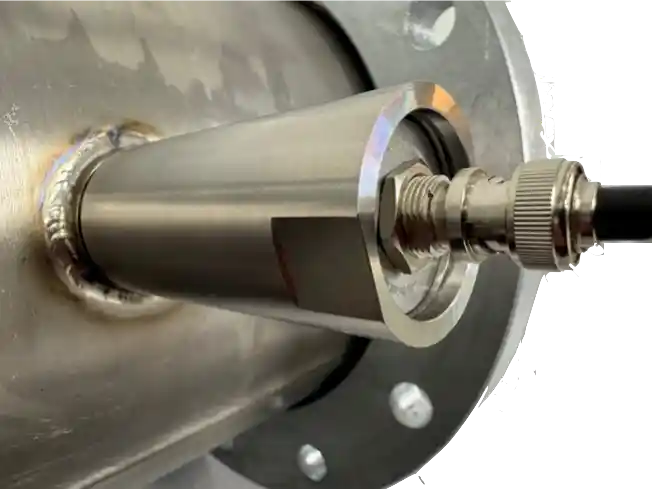
PIPE IQ
InTouch Electrodes: For fixed electrical tomography in pipelines, the required number of InTouch electrodes can be installed. This fully modular solution fits all pipelines.
PREDIT offers welding capabilities along with all necessary documentation, including pressure equipment certificates.
Unlock Full Technical Specifications